Mark Luigi Dacumos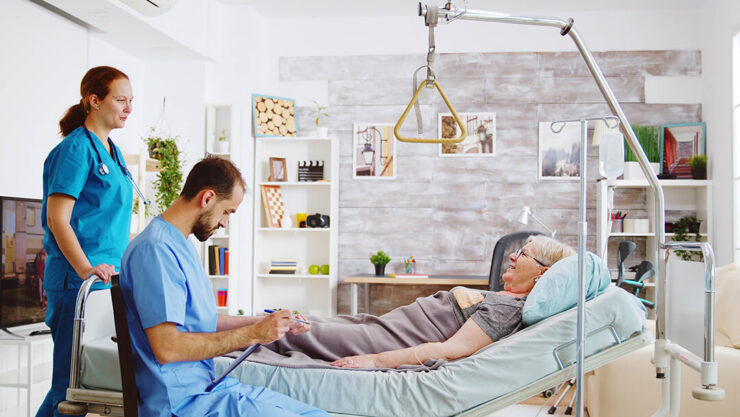
It’s what the home hospital model can provide, and we’ll take a closer look at how it can help you.
A hospital is probably one of the last places in the world where you’d want to be, but sometimes, you may have to check into one. Why? To get better. Unfortunately, that’s not always the outcome, as sometimes people end up getting sicker.
The Dangers of Hospitals
When you’re in a hospital setting, you’re exposed to many things that can negatively impact your health. You can suffer from complications like bleeding. You can get infections that make an already bad situation worse. And, depending on the hospital, you could be in close quarters with other patients who are even sicker than you.
What about rest? You may have a hard time getting it in a hospital, which can affect your recovery time. Nurses and doctors may perform frequent check-ins that can make it impossible to sleep. On the flip side, you may not get enough attention and find yourself stuck in your hospital bed. This excessive inactivity can lead to health problems as well.
As if those hospital dangers weren’t bad enough, there’s also the cost. And if you’ve ever seen a hospital bill, you know that even the shortest visits can be ridiculously expensive.
The Home Hospital Model
What could be a better alternative to traditional hospital care? The home hospital model or Hospital at Home (HaH). As its name suggests, you get the care you need at home versus a hospital. In doing so, you can be isolated from others with illnesses, be around your loved ones, get the rest or exercise you need, and cut costs.
To prove the effectiveness of HaH, Brigham and Women’s Hospital in Boston conducted a study of 91 adult patients published in the Annals of Internal Medicine. It was the first study of its kind, which had three significant findings when compared to traditional hospital care:
- HaH reduces costs.
- HaH reduces readmissions.
- HaH increases physical activity.
For the study, patients were admitted to the emergency room for conditions such as worsening chronic obstructive pulmonary disease (COPD), worsening heart failure, asthma, and infection.
They either stayed at the hospital or were sent home to receive care. Once the study was complete, researchers found that at-home care costs were 40 percent lower than hospital treatment. At-home patients had fewer lab tests and consultations yet experienced lower readmission rates (70 percent less) and were more active, which helped healing. In short, Hospital at Home offered cheaper care and better results.
The Main Problem With Hospital at Home
Although HaH produced lower costs and improved results in the study above, it does come with a major drawback: Medicare and Medicaid won’t pay for the care. Until they do, many will have to continue going to the hospital to receive treatment, as paying for HaH out of pocket may prove to be too expensive.